The Chemistry of the Cloud: Milk Foam, Filter Science, and the Thermodynamics of Taste
Update on Jan. 7, 2026, 5:46 p.m.
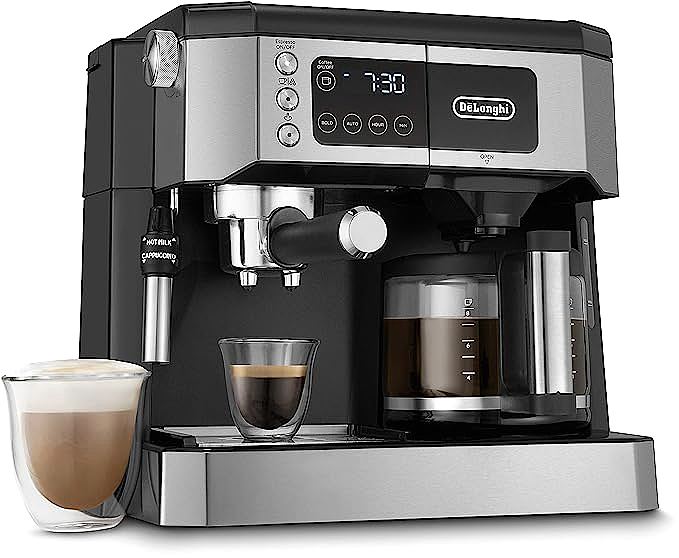
If espresso is the heart of a coffee drink, milk is the soul. The transformation of cold, liquid milk into a hot, velvety cloud of microfoam is a chemical miracle. It turns a harsh shot of espresso into a comforting latte or cappuccino. On the other side of the De’Longhi COM532M, another chemical process occurs: the slow, gravity-fed extraction of drip coffee.
While these two processes seem simple, they are governed by complex principles of Protein Chemistry and Filtration Dynamics. This article explores the science behind the “Advanced Steam Wand,” the “Gold Tone Filter,” and the “Bold Setting,” revealing how heat, air, and mesh geometry alter the molecular composition of your morning cup.
The Physics of Froth: Steam Wand Mechanics
The COM532M features an “Advanced Steam Wand.” In engineering terms, this often implies a Panarello style design or a hybrid wand that assists in air injection.
To create foam, two things must happen:
1. Air Injection: Air must be folded into the milk.
2. Stabilization: The protein structure of the milk must entrap these air bubbles.
The Venturi Effect
Many “advanced” or “automatic” wands use the Venturi Effect. As high-velocity steam shoots through a narrow nozzle, it creates a zone of low pressure. This vacuum sucks ambient air into the milk stream through a small intake hole. This ensures that even a novice can generate bubbles without mastering the delicate “surfing” technique required by professional wands.
Protein Denaturation
The heat from the steam does more than warm the milk; it changes it. Milk proteins (Casein and Whey) are normally folded structures. At around 140°F - 150°F (60°C - 65°C), these proteins begin to denature (unfold). The hydrophobic (water-repelling) parts of the protein expose themselves and attach to the air bubbles, while the hydrophilic (water-loving) parts stay in the liquid. This creates a protective film around each bubble, stabilizing the foam. * The Temperature Danger Zone: If the milk is heated beyond 160°F (70°C), the proteins coagulate completely (scald), destroying the foam structure and creating a burnt sulfurous taste. The “manual” nature of the De’Longhi wand puts the control—and the responsibility—of temperature monitoring in the user’s hands.
Drip Coffee Chemistry: The Gold Tone Advantage
On the right side of the machine lies the drip coffee maker. A key feature is the Gold Tone Filter. This is a permanent mesh filter, likely made of gold-plated stainless steel.
Why gold? Gold is chemically inert. It does not react with the acids in the coffee, ensuring no metallic taste is imparted. But the real difference lies in Filtration Geometry.
Paper vs. Mesh
- Paper Filters: Paper is a dense fiber matrix. It traps not only coffee grounds but also Coffee Oils (Diterpenes) and micro-fines. The result is a “clean,” bright cup with high clarity but light body.
- Mesh Filters (Gold Tone): The mesh has larger, uniform holes. It allows the coffee oils (the carriers of many aromatic compounds) to pass through into the carafe. It also lets some microscopic sediment through. The result is a cup with heavier body, richer mouthfeel, and a more robust flavor profile. It is scientifically “bolder” because it contains a broader spectrum of the bean’s soluble and colloidal compounds.
The “Bold Setting”: Extraction Kinetics
The COM532M includes a “Bold Setting.” What does this button actually do to the physics of the machine?
It likely modifies the Duty Cycle of the water pump or the heating element.
1. Intermittent Flow: Instead of a continuous stream of water, the machine pauses.
2. Increased Contact Time: This allows the water to sit in the filter basket longer (saturation).
3. Higher TDS: Longer contact time means more diffusion of solids from the grounds into the water. This increases the Total Dissolved Solids (TDS), objectively making the coffee stronger (bolder).
This mimics the “immersion” principle of a French Press within a drip machine, extracting deeper, more caramelized notes from the roast.
Conclusion: The Laboratory on the Counter
The De’Longhi COM532M is more than a convenience appliance; it is a chemical reactor. It uses steam to restructure milk proteins, mesh geometry to preserve flavor oils, and variable flow rates to manipulate extraction yields.
By understanding the “Chemistry of the Cloud” (milk foam) and the “Physics of Filtration,” users can move beyond simply pressing buttons. They can begin to experiment—adjusting milk temperature for texture, choosing the right roast for the gold filter—mastering the variables that turn a beverage into an experience. It proves that the line between a home kitchen and a chemistry lab is drawn only by the curiosity of the cook.


