Anatomy of a "Crinkle": Investigating the KEB90's Ghost Noise
Update on Dec. 30, 2025, 3:54 p.m.
User Marat Depresia asked a chilling question in their review: “Every time I press the earphones into my ear they make a crinkling sound. Is that normal?” To the uninitiated, this sounds like a broken product, a loose wire, or cheap manufacturing. To a forensic audio engineer, this is the distinct signature of Driver Flex. It is not a defect; it is a side effect of physics, and it tells us something profound about the Koss KEB90’s engineering (The Horror Story).
The Pneumatic Piston Effect
The KEB90 uses a dynamic driver—essentially a miniature speaker cone. The diaphragm is a thin, lightweight membrane designed to vibrate.
When you insert the earbud into your ear using silicone tips, you are creating a hermetic seal. As you push the bud deeper, you are compressing the volume of air trapped in your ear canal. Because the earbud seals the canal, this pressurized air has nowhere to go but to push against the driver’s diaphragm (Physics).
The “Crinkle” Explained
If the diaphragm is made of a material that is both thin (for detail) and slightly rigid (for speed), this air pressure can cause it to buckle or “pop” momentarily. That is the “crinkle” sound—the mechanical deformation of the speaker cone under pneumatic load.
Paradoxically, this usually indicates a good seal. If the earbud were leaking air (a bad fit), the pressure would escape, and you wouldn’t hear the flex. It confirms that the user has achieved the necessary acoustic coupling for deep bass (Detective Logic).
The Venting Paradox
But wait—the KEB90 is advertised as an “Open-air design.” Shouldn’t the vents release this pressure?
Yes and no. The vents on the back of the chassis relieve pressure behind the driver. However, the pressure causing Driver Flex is in front of the driver (in your ear canal). Unless there is a front-cavity vent (which reduces isolation and bass), the pressure remains. The KEB90’s vents optimize the driver’s movement during playback but do not eliminate the insertion pressure spike (Nuance).
Field Note: To eliminate the crinkle and protect your drivers, change your insertion technique. Do not shove them straight in like a plunger. Pull the top of your ear up and back to open the canal, insert the earbud gently, and then let go of your ear. This allows air to equalize around the tip during insertion. Alternatively, switching to Foam Tips (included) often solves this because foam is porous enough to let static air pressure escape while still blocking sound waves.
The Flat Cable: A Silent Partner
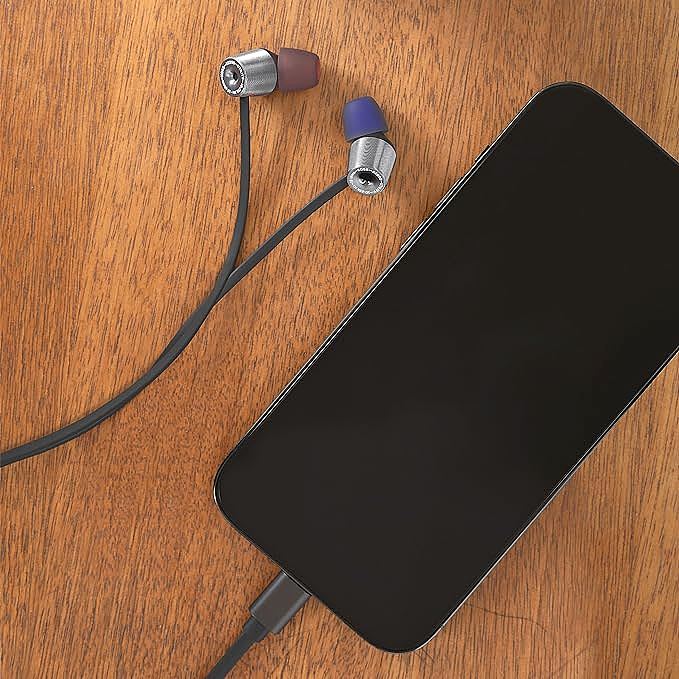
Another mechanical detail often overlooked is the flat cable. Standard round cables act like stethoscopes. If they rub against your shirt, the friction vibration travels up the cable and into your ear—a phenomenon called microphonics.
The KEB90 uses a flat profile. Geometrically, a flat cable has a different moment of inertia compared to a round one. It resists twisting and tends to lay flat against the body, increasing the contact surface area which dampens vibrations before they reach the ear shell (Thesis). This is a crucial feature for a “Utility” earbud designed for commuting and movement.
FMEA: The 2.5mm Weak Link
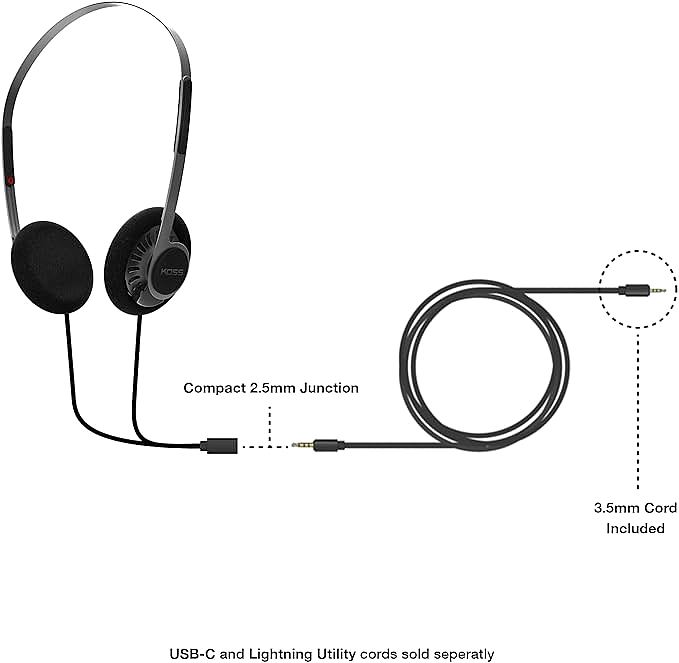
While the detachable cable system is brilliant for DAC swapping, it introduces a proprietary failure point. The connection at the earbud yoke is a 2.5mm TRS jack. * Risk: Unlike MMCX connectors which can rotate, a 2.5mm jack creates a rigid lever arm. If you snag the cable violently, the leverage could damage the internal socket on the earbud housing (FMEA). * Prevention: Always disconnect the cable by pulling the plug body, never the wire. And be aware that finding a replacement cable means buying from Koss, as standard 3.5mm aux cables will not fit.
Verdict: Perfectly Imperfect Physics
The “crinkling” sound of the Koss KEB90 is a reminder that you are putting a high-precision mechanical instrument into a biological pressure chamber. It is a quirk of high-seal dynamic drivers, not a sign of failure. By understanding the pneumatics of your ear, you can manage the flex and enjoy the open-air fidelity that lies beneath.


