The Wireless Engine: Deconstructing the QCC3020 and Power Architecture
Update on Dec. 7, 2025, 7:50 a.m.
While acoustic drivers generate the sound, the user experience of any True Wireless Stereo (TWS) device is dictated by its silicon brain and its power plant. The Final EVATW(02) is built around the Qualcomm QCC3020 chipset. In the rapidly evolving timeline of semiconductor technology, the QCC3020 serves as a fascinating study in mature, optimized engineering. It may not boast the latest Bluetooth 5.3 features, but its architecture provides a specific balance of connection stability and energy efficiency that defines the EVATW(02)’s utility.
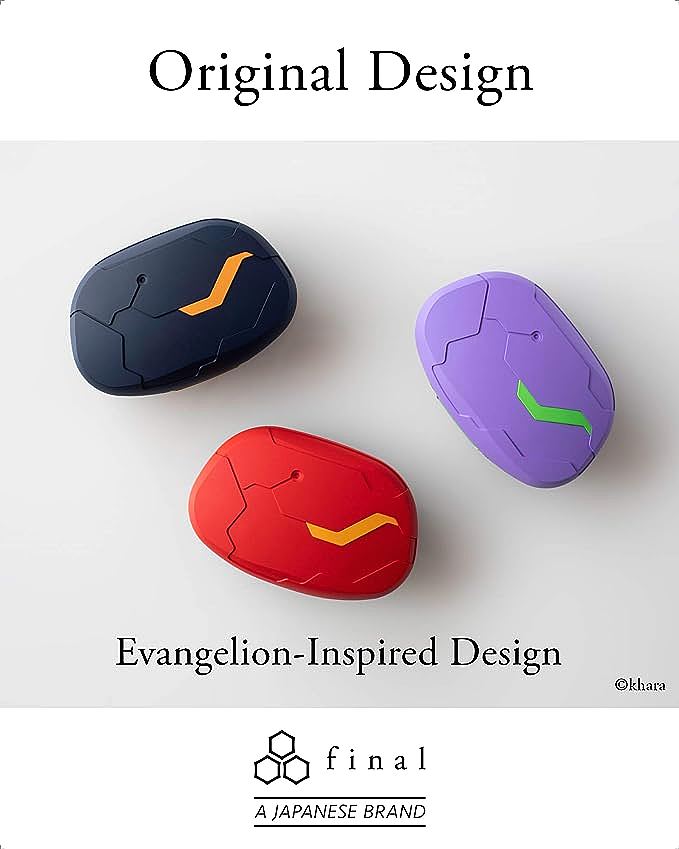
The Silicon Heart: Qualcomm QCC3020 Analysis
The QCC3020 is a System-on-Chip (SoC) designed specifically for entry-to-mid-tier TWS applications. Its primary claim to fame is its support for TrueWireless Stereo Plus (TWS+). * Standard Legacy Connection: In older TWS implementations, the phone connects to one earbud (Master), which then relays the signal to the other earbud (Slave). This relay introduces latency and consumes more power on the Master unit, leading to uneven battery drain. * TWS+ Advantage: When paired with a compatible Snapdragon-powered smartphone, the QCC3020 allows both earbuds to connect directly to the phone simultaneously (Thesis). This reduces latency, improves connection robustness against RF interference, and ensures balanced power consumption (Physics).
However, it is crucial to note that if the source device does not support TWS+, the QCC3020 reverts to the Master-Slave switching protocol (Nuance). While Qualcomm’s switching technology is seamless enough to be unnoticeable during music playback, it represents a fallback state that relies heavily on the efficient management of the 2.4GHz spectrum to prevent dropouts in crowded RF environments like subway stations.
The 950mAh Power Reservoir
One of the most striking specifications of the EVATW(02) is the charging case’s battery capacity: 950mAh. To put this in perspective, many premium competitor cases hover around 400-500mAh (Data).
This massive reservoir serves a dual purpose.
1. Extended Autonomy: It provides the advertised “up to 63 hours” of total playback time. For a user, this translates to charging the case perhaps once a week, or even once every two weeks, depending on usage intensity (Scenario).
2. Battery Health Buffer: Lithium-ion batteries degrade with charge cycles. By having a larger capacity, the case requires fewer charge cycles per year compared to a smaller case, theoretically extending the calendar lifespan of the battery pack before it degrades to unusable levels.
The earbuds themselves house 50mAh cells, delivering a solid 6-9 hours of playback. The variance depends heavily on the codec used; aptX is more computationally intensive and will drain the battery faster (closer to 6 hours) than the simpler SBC codec (closer to 9 hours). This is a classic engineering trade-off between fidelity and endurance.
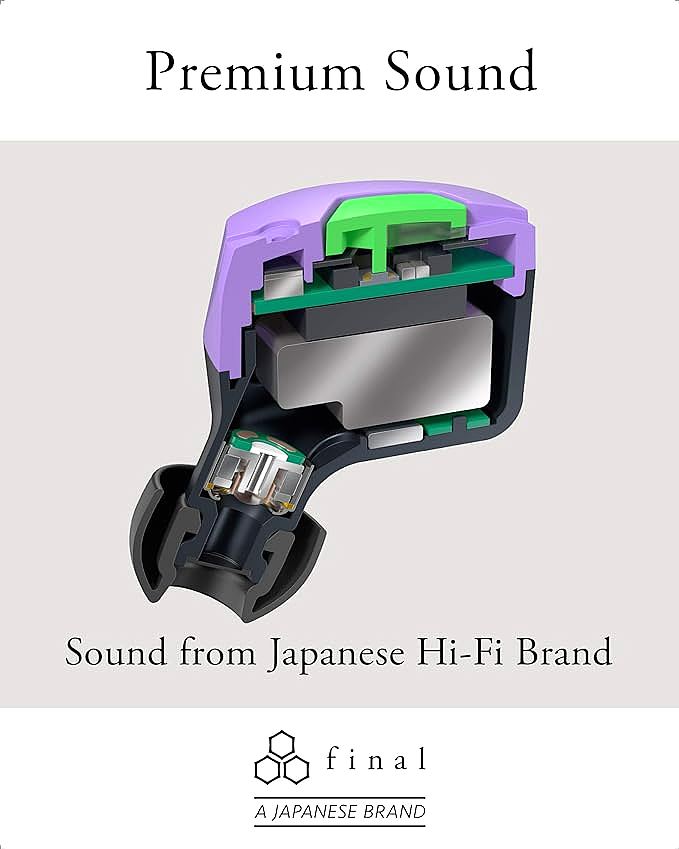
Interface Modernization: USB-C
Critically, Final Audio implemented a USB Type-C charging port for the case. In an era where Micro-USB is rightfully dying out, this inclusion ensures the EVATW(02) integrates seamlessly into modern cable ecosystems. It supports standard 5V charging profiles. While it lacks wireless charging (Qi)—a feature often found in this price bracket—the sheer capacity of the battery arguably mitigates the need for frequent “top-ups” on a charging pad.
Predicted Failure Mode: The Battery Chemistry
Despite the robust capacity, lithium-ion chemistry remains the ultimate limiter. The earbuds’ small 50mAh cells operate under high stress (depth of discharge). Over 2-3 years, their capacity will inevitably diminish. Unlike the case, which has a large buffer, the earbuds may eventually struggle to hold a charge for a full movie duration. Furthermore, the QCC3020, while stable, is hardware-locked to Bluetooth 5.0. As Bluetooth LE Audio and LC3 codecs become standard in the coming years, this device will not be able to upgrade via firmware, eventually rendering it a legacy device in terms of feature set (FMEA).
In summary, the EVATW(02)’s hardware architecture prioritizes endurance and connection reliability over bleeding-edge features. The combination of the QCC3020’s TWS+ capability and a massive 950mAh battery creates a device that is a “marathon runner”—built to keep going long after others have returned to the dock.


